
Should You Reward Visits or Reward Spend? A Practical Decision Guide
The choice between rewarding how often customers visit and how much they spend is one of the most consequential decisions in loyalty programme design — and most businesses make it by accident.
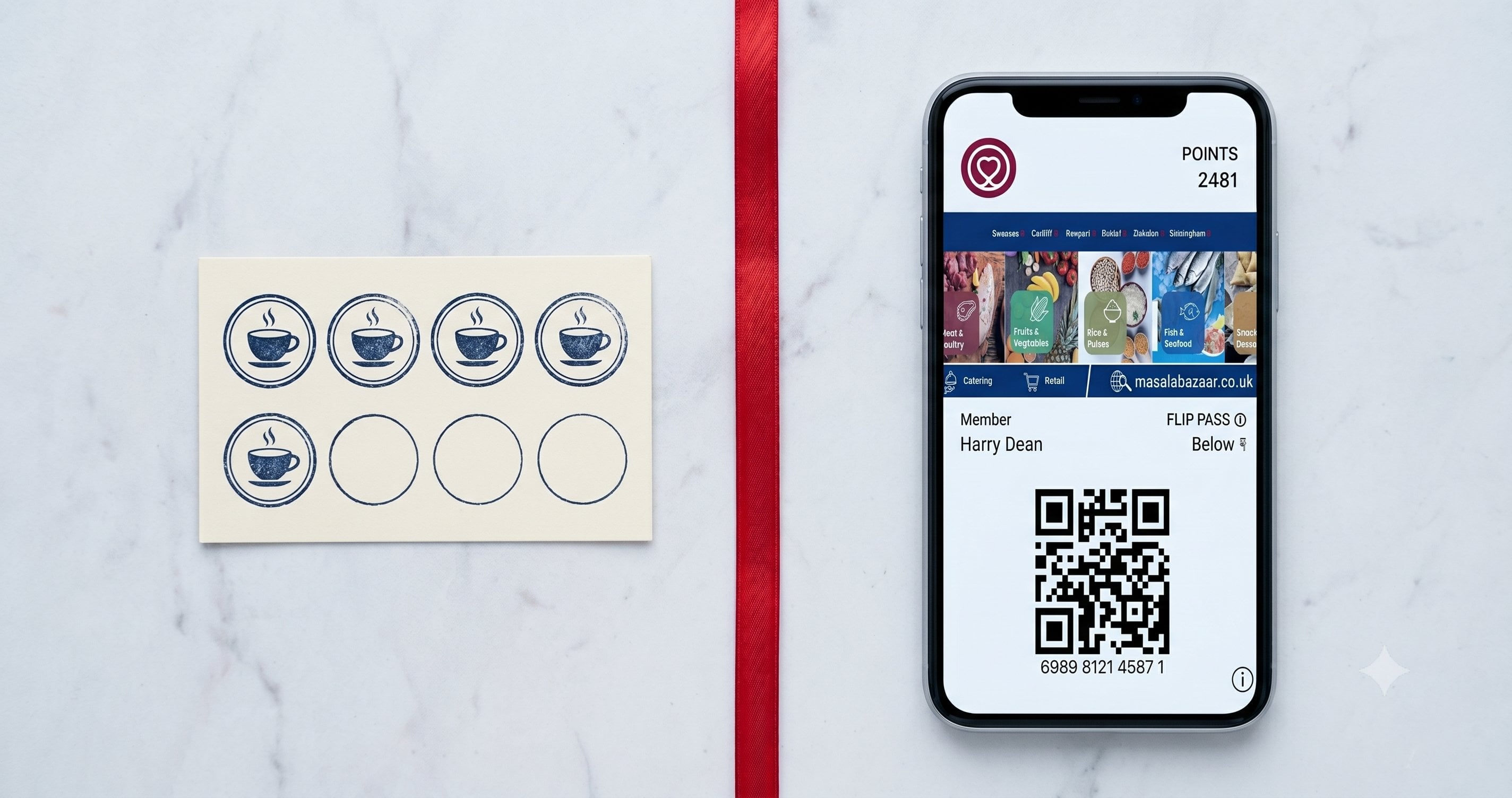
When independent business owners set up a loyalty programme for the first time, they tend to focus on the reward itself — what to give, and when. The question of what behaviour to reward is answered more quickly than it deserves. Most choose stamps because stamps are familiar, or points because points sound more sophisticated. Neither is the wrong answer, but the choice matters more than it seems.
The mechanic you choose determines which customers benefit most, which behaviours you reinforce, and ultimately what kind of regular your programme produces. It is worth spending ten minutes getting it right.
Why the reward mechanic shapes your customer base
A loyalty programme does not simply reward customers. It selects which customers to reward most. A visit-based programme gives its best benefits to your most frequent visitors, regardless of how much they spend. A spend-based programme gives its best benefits to your highest spenders, regardless of how often they come in.
What’s at stake
Choose the wrong mechanic for your business type and your most loyal customers will receive a disproportionately small share of the rewards, while customers who are less central to your business model benefit more. This is not catastrophic, but it is a waste. A programme that rewards the right behaviours will outperform one that rewards the wrong ones, all else being equal. The good news is that the right answer for your business can usually be found in your own transaction data within an afternoon.
That is how much more loyalty programme members spend compared to non-members at the point of reward redemption. Whether the mechanic is visit-based or spend-based, a well-matched programme produces significantly higher transaction values at the moments that matter most.
Source: LoyaltyLion Customer Loyalty Statistics 2025-2026 — loyaltylion.com/blog/35-loyalty-stats-and-benchmarks-for-2022-and-beyond
How to think about the choice
The decision comes down to one question: what is the behaviour you most want to change? If you want customers to come in more often, reward frequency. If you want them to spend more when they do come in, reward spend. Most businesses want both, but the mechanic that addresses the primary constraint is the right place to start.
Rewarding visits: the case for frequency
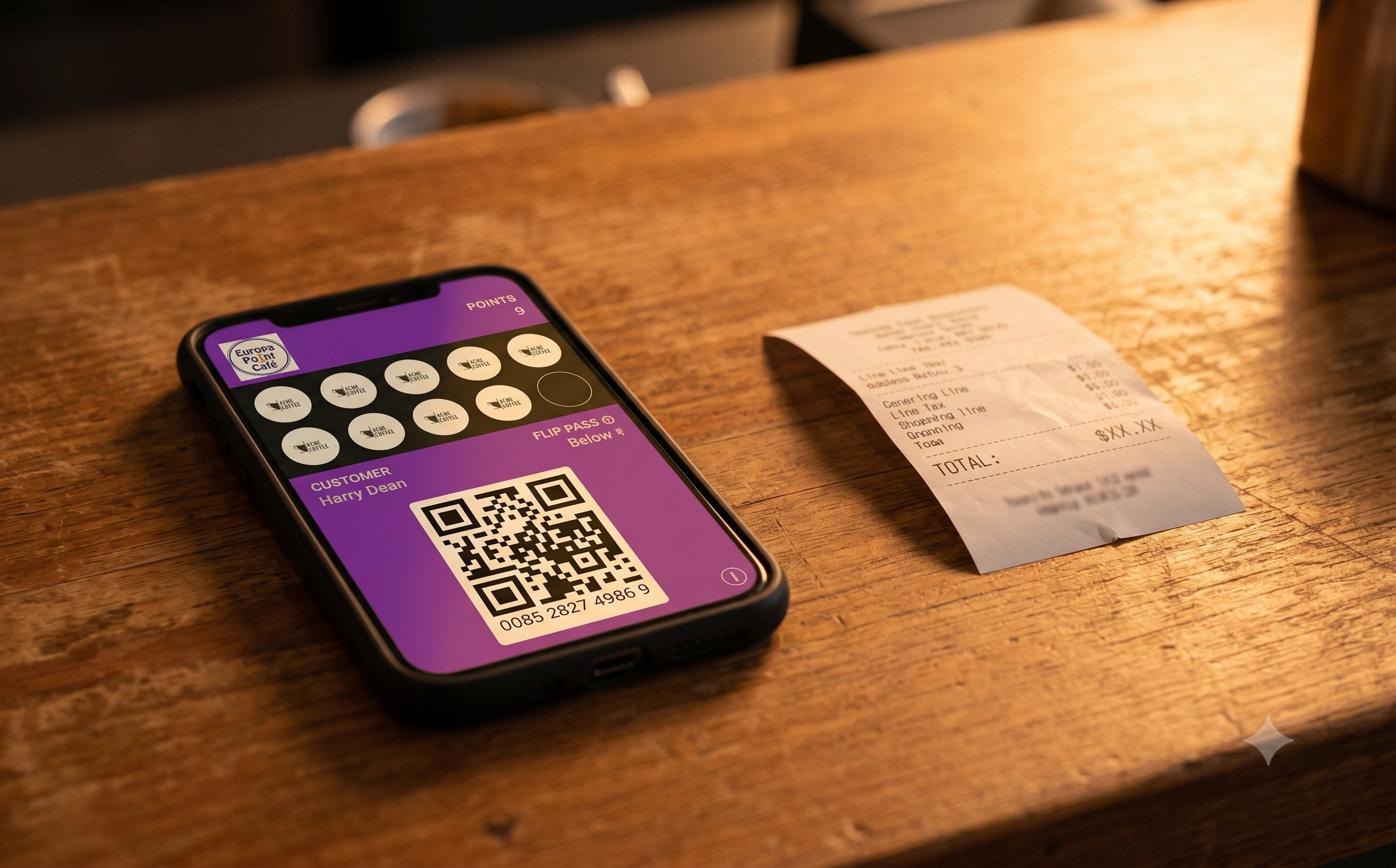
Visit-based programmes, typically stamp cards, are easy for customers to understand and quick to feel rewarding. Every visit brings them visibly closer to a goal, which reinforces the habit of returning. For businesses where most customers buy similar things at a similar price — a coffee shop, a lunch place, a barber — there is little to be gained from tracking spend. The customer who buys a flat white every weekday is exactly the person a stamp card is designed for. The programme works because the behaviour you want to reinforce is already there; you are simply making it more visible.
Rewarding spend: the case for basket size
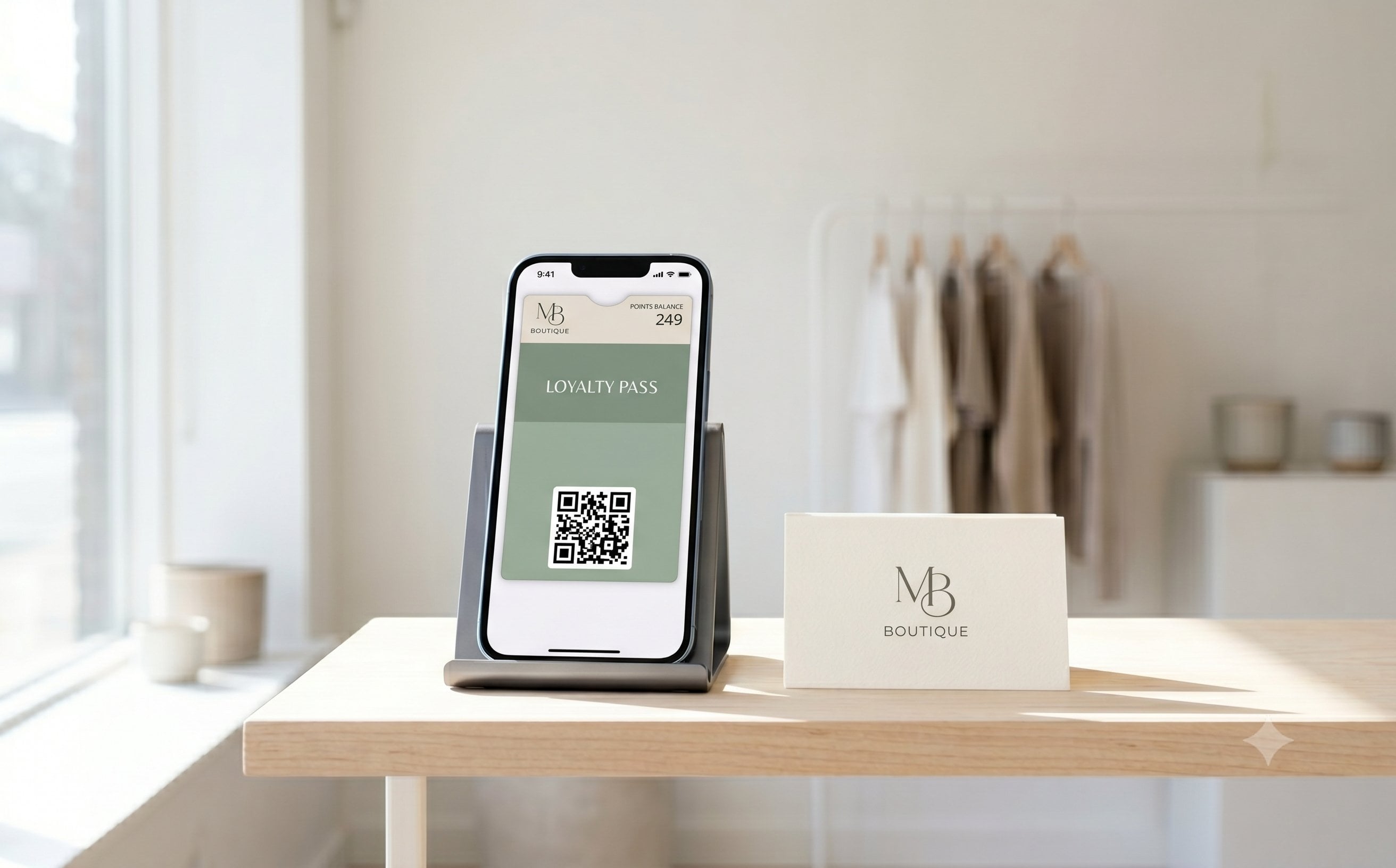
Points-based programmes reward customers in proportion to what they spend, which makes them a better fit for businesses where transaction values vary considerably. A boutique where one customer buys a single candle and another buys a full outfit has very different dynamics from a coffee shop. A visit-based scheme in that context gives equal rewards to unequal customers. Points adjust automatically: the higher the spend, the greater the benefit. They also lend themselves to upselling, because customers who are close to a reward threshold are more likely to add an item to reach it.
What your transaction data is telling you
Before choosing, look at your last three months of transactions and ask two questions. First: how much does average basket size vary between customers? If most transactions fall within a narrow range, visit-based rewards are the better fit. If there is wide variation, spend-based rewards will serve you better. Second: how often do your regular customers visit? If they visit weekly or more, a stamp card reaches a reward quickly enough to feel motivating. If they visit monthly, the wait for a reward may be long enough to undermine the effect.
What the evidence shows
Research consistently shows that the match between mechanic and customer behaviour matters more than the generosity of the reward. A visit-based scheme that reaches a reward quickly will outperform a spend-based scheme that takes months to accumulate, even if the spend-based reward is nominally worth more. Speed of reinforcement is a stronger driver of repeat behaviour than reward size.
For businesses new to loyalty, the simplest and most accessible programme design is usually the right place to start. If you are still working through the fundamentals of programme structure, our post on creating a loyalty programme that actually works covers the building blocks before the mechanic question becomes relevant.
What works, and for whom
Visit-based programmes work best where transaction uniformity is high and visit frequency is at least weekly. Spend-based programmes work best where basket size varies and customers visit less frequently. In practice, most independent cafes and food businesses are better suited to visit-based rewards, while most boutiques, salons, and multi-category retailers are better suited to spend-based ones. There are exceptions, and the transaction data question above is the most reliable way to find them.
Making the call
If you run a café, takeaway, or food business…
Use visit-based rewards. Your customers buy similar things at similar prices, they visit frequently, and they appreciate the simplicity of counting visits toward a visible goal. Set the reward threshold at a point that is achievable within four to six weeks for a regular customer. Any longer and the programme loses its motivating effect. Stamp cards, whether physical or digital, are the right mechanic here.
If you run a boutique, salon, or specialist retail…
Use spend-based rewards. Your basket size varies, your customers visit less frequently, and points give you the flexibility to reward proportionally without the awkwardness of a stamp card where someone who spends thirty pounds and someone who spends three pounds earn the same reward. Set your points-to-reward ratio so that a customer spending at your average basket size reaches a meaningful reward within three to four visits.
If your customer base is split between the two patterns…
Start with visits. It is easier to explain, quicker to build engagement with, and simpler to manage. A visit-based programme that is working well is a better foundation than a points programme that is theoretically more sophisticated but poorly understood by your customers. You can always add a spend layer later once the habit of returning is established.
The best loyalty mechanic is not the most sophisticated one. It is the one that matches what your customers actually do and rewards the behaviour you most want to see more of.
Frequently asked questions
Can I switch from stamps to points later if I change my mind?
Yes, but plan the transition carefully. Existing members will need to understand how their progress converts to the new system, and the change should feel like an upgrade rather than a complication. The most straightforward approach is to honour all existing stamps to completion, then introduce the new mechanic for new members and new earn activity. Communicating the change clearly and positively is more important than the technical details of the switch.
Is a digital loyalty programme better than a physical stamp card?
Digital programmes give you data that physical cards cannot: who your members are, how often they visit, and which rewards are being redeemed. That data is what allows you to improve the programme over time. Physical cards are familiar and require no sign-up friction, which is a real advantage for first-time adoption. For most independent businesses, a digital programme that is easy to join is the better long-term investment. The data alone tends to pay for the switch within a few months.
How do I know if my loyalty programme mechanic is working?
Look at two numbers: visit frequency among loyalty members compared to non-members, and your redemption rate. If members are not visiting more often than non-members, the mechanic is not reinforcing the right behaviour. If your redemption rate is low (below 20%), the reward threshold may be set too high or customers do not understand the programme well enough to stay motivated. Both problems are fixable without redesigning the programme from scratch.
Set up the right programme for your business today
LoyaltyDog supports both visit-based and spend-based reward mechanics, so you can choose the right fit for your customers and change it as your business grows.
See how it works →